When movement can be traced, what does continuity look like?
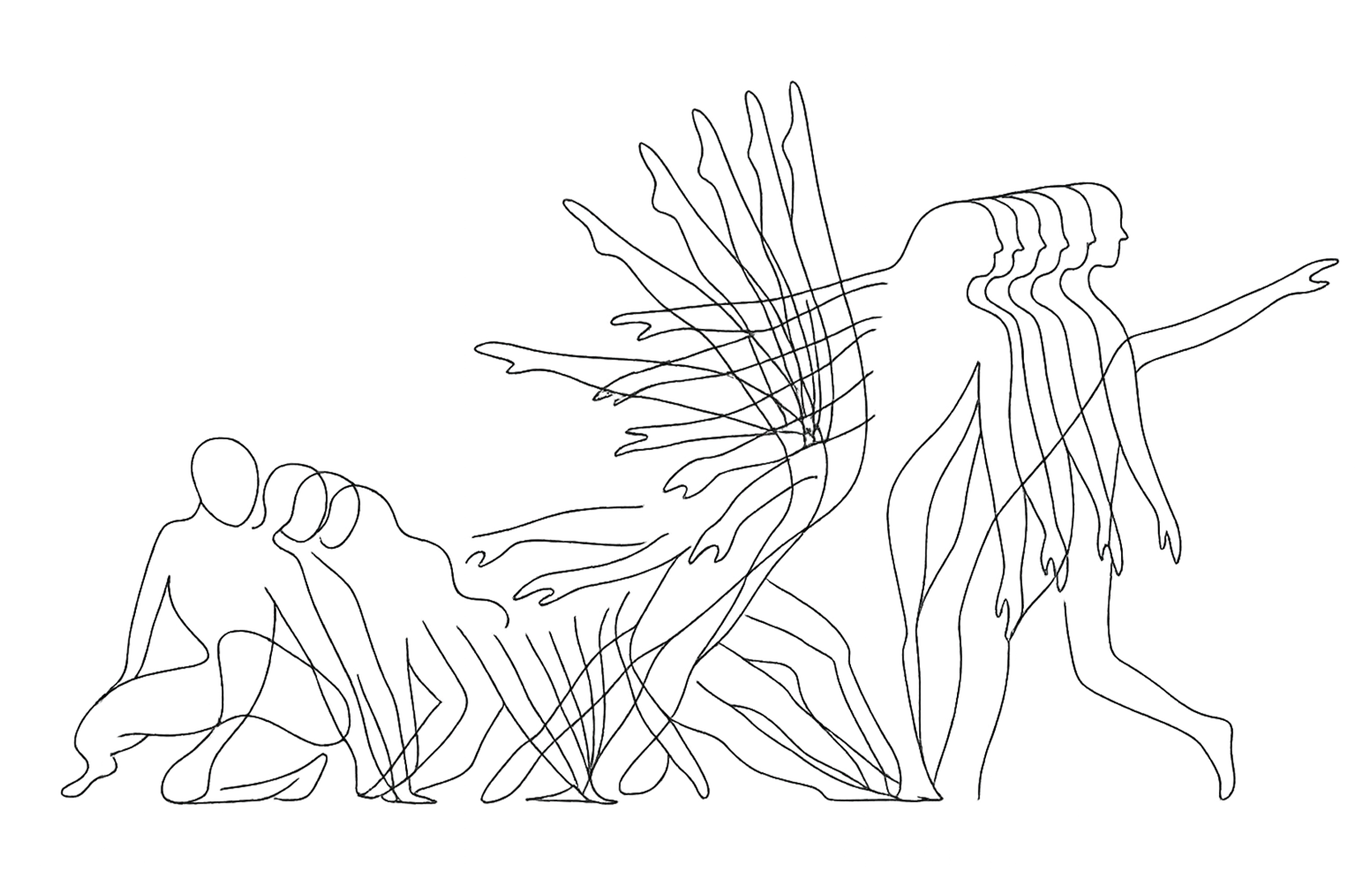
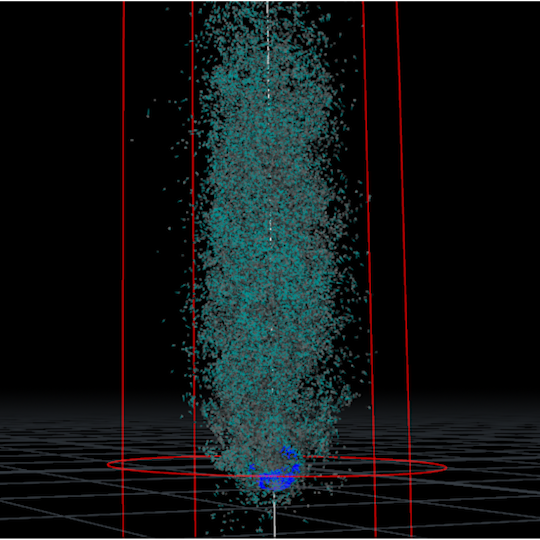
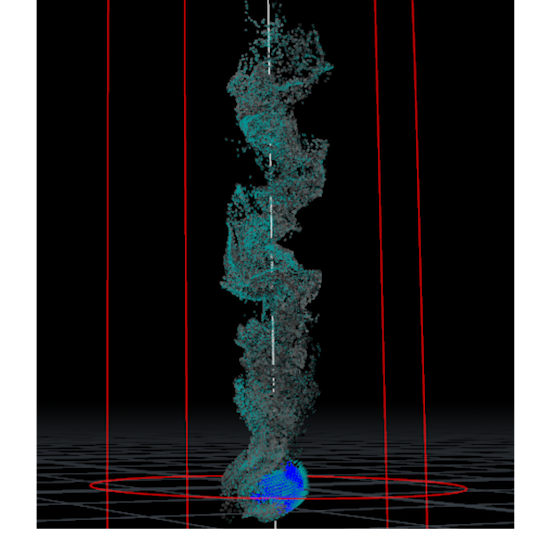
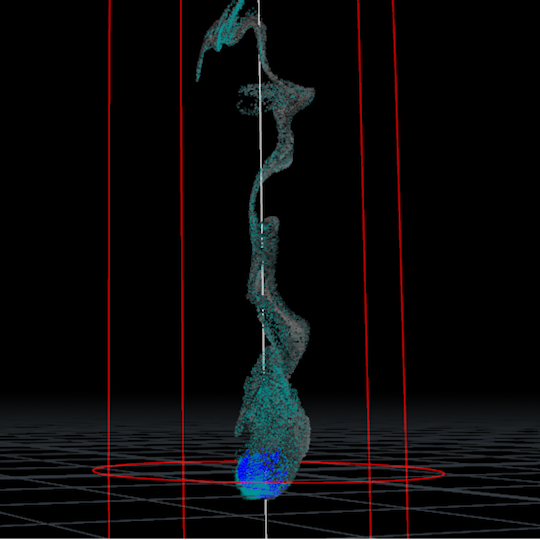
Tempo explores how the continuity of human motion can be revealed through computational means. Using a physically-based particle system, the project traces movement as a flow of force. When velocity, acceleration, and directional change shape evolving fields and visual trails, it encourages viewers to follow, interpret, and sense the dynamics embedded in motion.
Tempo grew out of my curiosity about how motion carries meaning beyond visible form. When watching dance performances, I became particularly drawn to what happens between poses: the momentum that persists, the hesitation before a shift, and the subtle forces that stretch and reshape space as the body moves. These qualities are often felt intuitively, yet they are difficult to isolate or describe using conventional motion representations.
Rather than treating movement as a sequence of discrete positions, Tempo investigates motion as a continuous flow of force. I am interested in the in-betweens of motion, particularly how velocity, acceleration, and directional change can be understood as a representation of “trace” that persists over time and shape behavior, rather than simply describing where a body has been.
This project serves as an early research exploration into how human motion can act as input for a computational system. By translating motion capture data into force fields and particle behaviors, Tempo asks how computational systems might sense continuity, rhythm, and momentum, instead of reacting only to static poses or events.
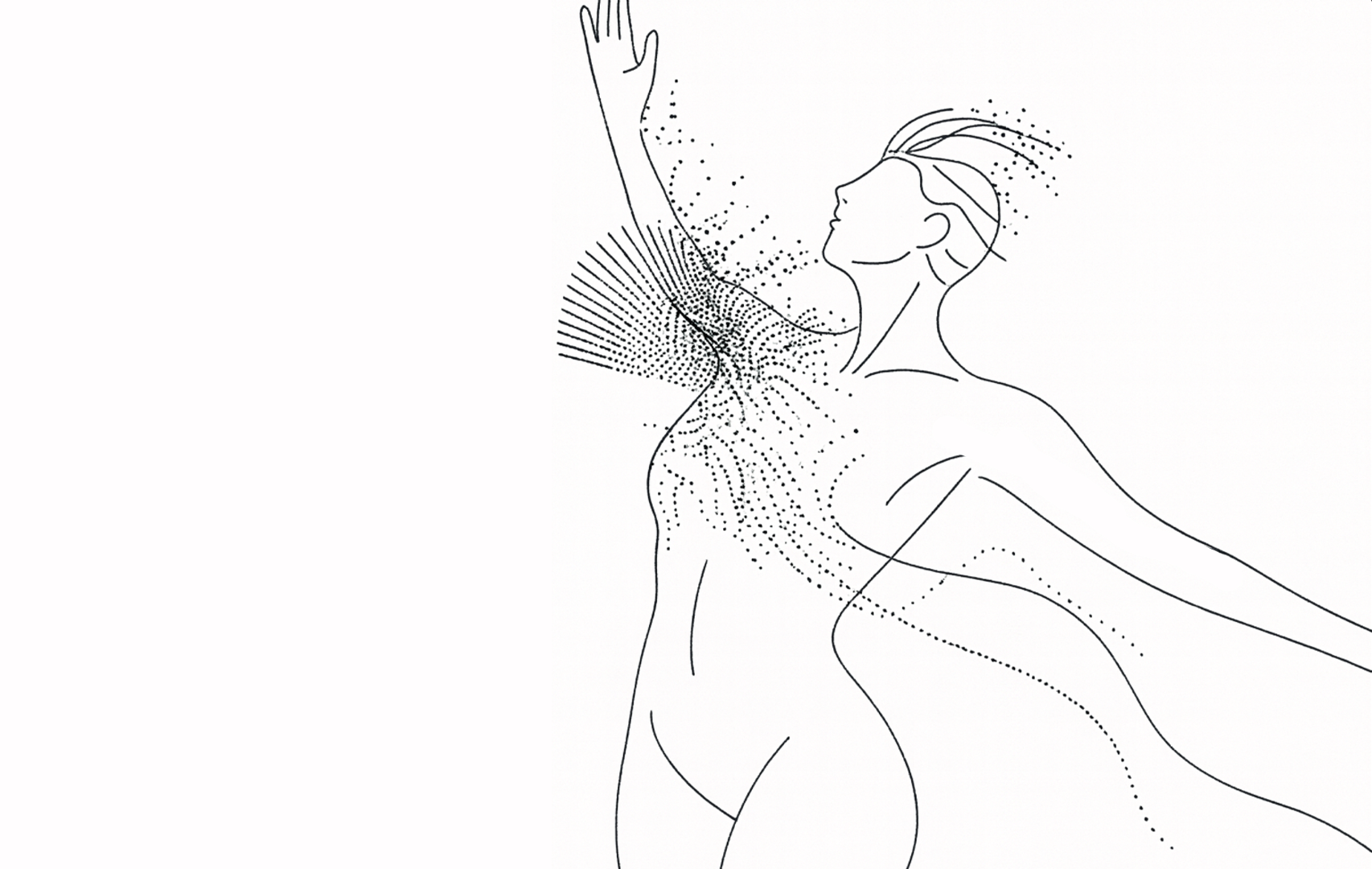
Through this process, I explore particles as a medium for recording motion over time. Unlike geometry, particles allow force to accumulate, disperse, and transform more fluidly and make temporal continuity visible. Tempo positions motion not as something to be reproduced, but as something that can actively shape a dynamic system, revealing how movement itself can become computational material.
Tempo investigates how motion can be interpreted as force, and how a particle medium can document continuity as flow rather than form.
How can motion be translated into a continuous force landscape?
What becomes visible when force is represented as flow rather than geometry?
The goal is not to animate an object, but to let movement shape the behavior of a dynamic system.
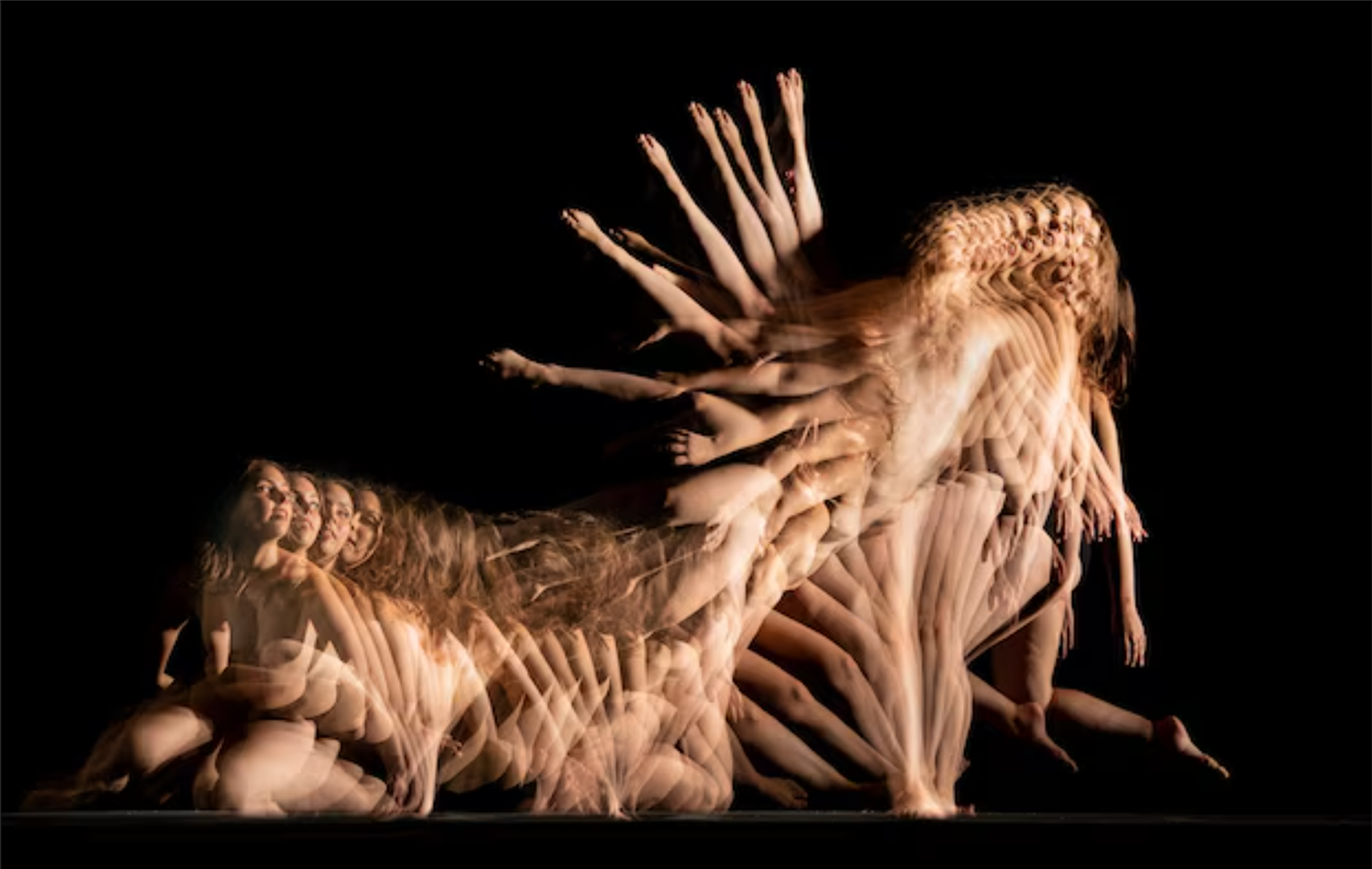
Motion study: directionality & rhythm
Motion study: motion extraction
Continuity traces: trails as time-based record
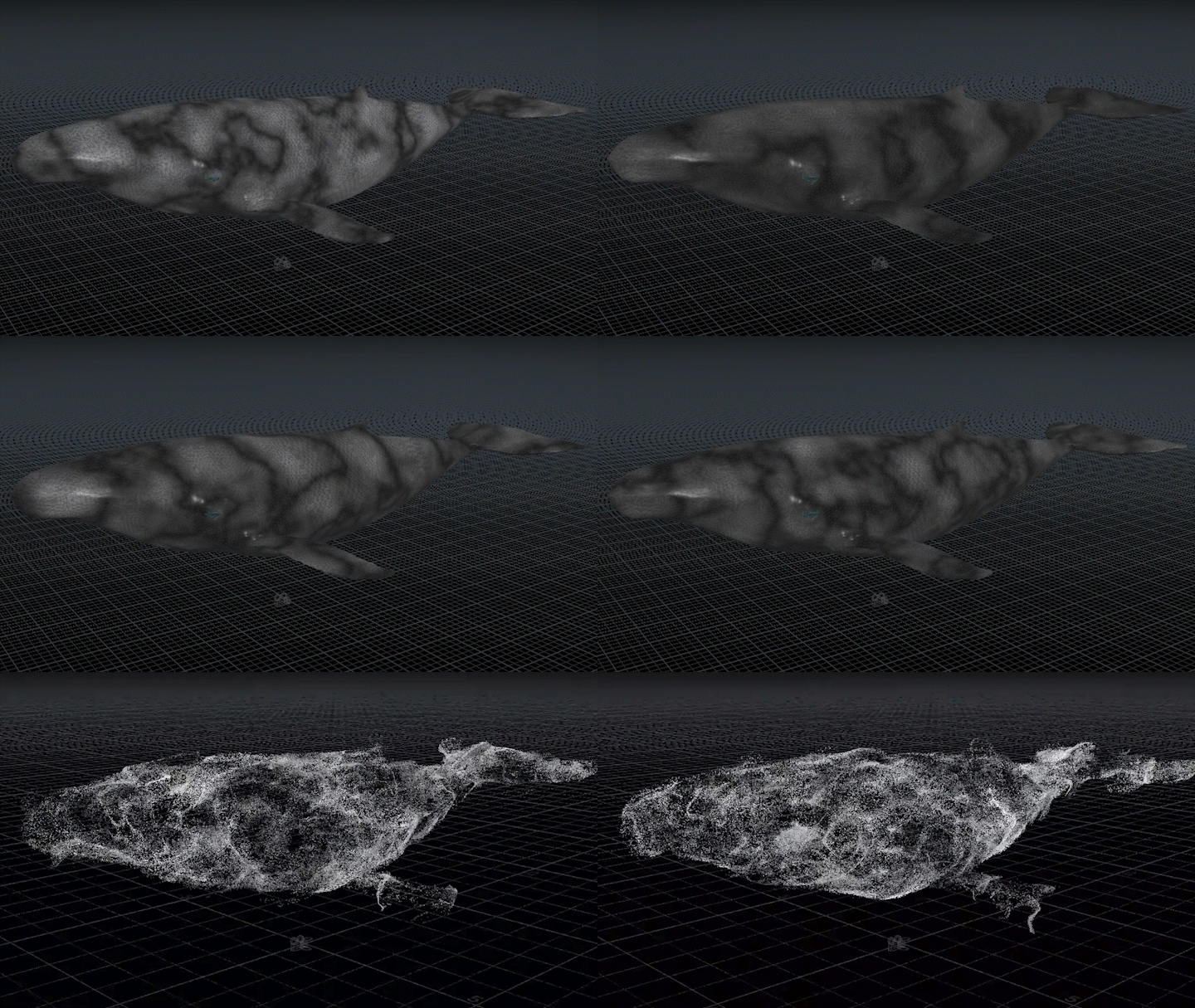
Compared to geometry, particles can represent force as flow—accumulating, dispersing, and transforming over time—creating a more continuous trace of motion.
Continuity is treated as temporal coherence—how momentum carries across frames—rather than a sequence of discrete poses.
Full-body gestures were captured using a Rokoko motion capture suit and processed beyond skeletal animation. Motion data was interpreted as vectors of directionality, momentum, and temporal continuity, describing how force flows through the body over time. These vectors form the energetic input that drives the system.
Motion-derived vectors were mapped into signed distance fields that encode acceleration, flow, and spatial influence. Rather than discrete coordinates, movement generates a continuously evolving force landscape that shapes system behavior.
A custom particle system responds to the force fields by adjusting velocity, turbulence, and trail behavior. Particles behave as if reading the dancer’s energy—swirling, clustering, stretching, or dissolving in response to expressive motion.
Goal: preserve continuity while reducing noise.
Result: usable velocity/acceleration signals for force mapping.
Goal: translate force into spatial influence (distance fields).
Result: stable propagation + readable flow responses.
Goal: make temporal continuity legible through trails.
Result: length/curl/density respond to acceleration & direction change.
Tempo produced a computational system that visualizes motion as continuous force rather than discrete form. Motion capture was translated into vector and distance-based fields, allowing velocity, acceleration, and directional change to drive fluid particle behavior and time-based trails. Through iteration, particles proved especially effective for making continuity legible—preserving temporal coherence where geometry tends to fragment it.
While Tempo made force and continuity visible, the interaction remained indirect: the system responded to recorded motion, but the performer received no real-time feedback while moving. This clarified a key gap—visualizing motion is not the same as interacting with it. Without a feedback loop, motion could be traced and analyzed, but not explored as an ongoing dialogue between body and system.
What happens when motion is not only traced, but answered? How might a system respond as movement unfolds, so the body can adapt, explore, and co-create in real time?
( This shift directly informed Echoes of Motion, where continuity and gesture are experienced through responsive feedback between human movement and computational behavior. )
Pathways for further exploration:
From Individual Gesture to Collective Expression
Extend force-based motion mapping into a richer vocabulary to allow multiple bodies to shape overlapping and collective motion fields.
Learning-Based Gesture Interpretation
Explore adaptive systems that learn from repeated movement patterns, enabling the system to respond to personal or evolving motion styles rather than predefined gestures.
Architectural and Multimodal Extensions
Translate force flow into multimodal outputs
(sound, light, spatial feedback).